Fifth-Wheel Wear: What To Check Before It Strands You
Fifth-wheel wear checks for car-hauler operators — coupling play, worn jaws, kingpin, and cracks — so you catch it on a lift, not on the shoulder of I-80.
Last updated on
July 27, 2026
The fifth wheel is the one connection between your tractor and everything you're hauling. When it's wearing, you feel it long before it fails — a chuck when you pull away, a shimmy, a little more play than there used to be. Those are the cheap warnings. The expensive version is a kingpin that's worn your jaws loose, or a coupling that lets go on the road. A few minutes on your walkaround catches the wear while it's still a bolt-and-bushing job. Here's what to look at.
That jerk or "chuck" through the cab when you accelerate or brake is slack in the coupling — and it's the earliest sign the fifth wheel is wearing. A little movement is normal; a lot is not. Left alone, that play pounds the jaws and the kingpin against each other every mile, so a small amount of wear turns into a lot, fast. If the chuck is getting worse week to week, don't wait for your next PM.
Couple to the kingpin, then get under and look at how the jaws sit. They should close fully and snug around the pin, with the locking handle seated. Worn jaws don't grip — they leave a gap that shows up as play up top and, at the worst end, as a coupling that can release when it shouldn't. This is a check worth doing by eye, not just by feel. Jaws are a wear part; replacing them is routine when you catch it in time.
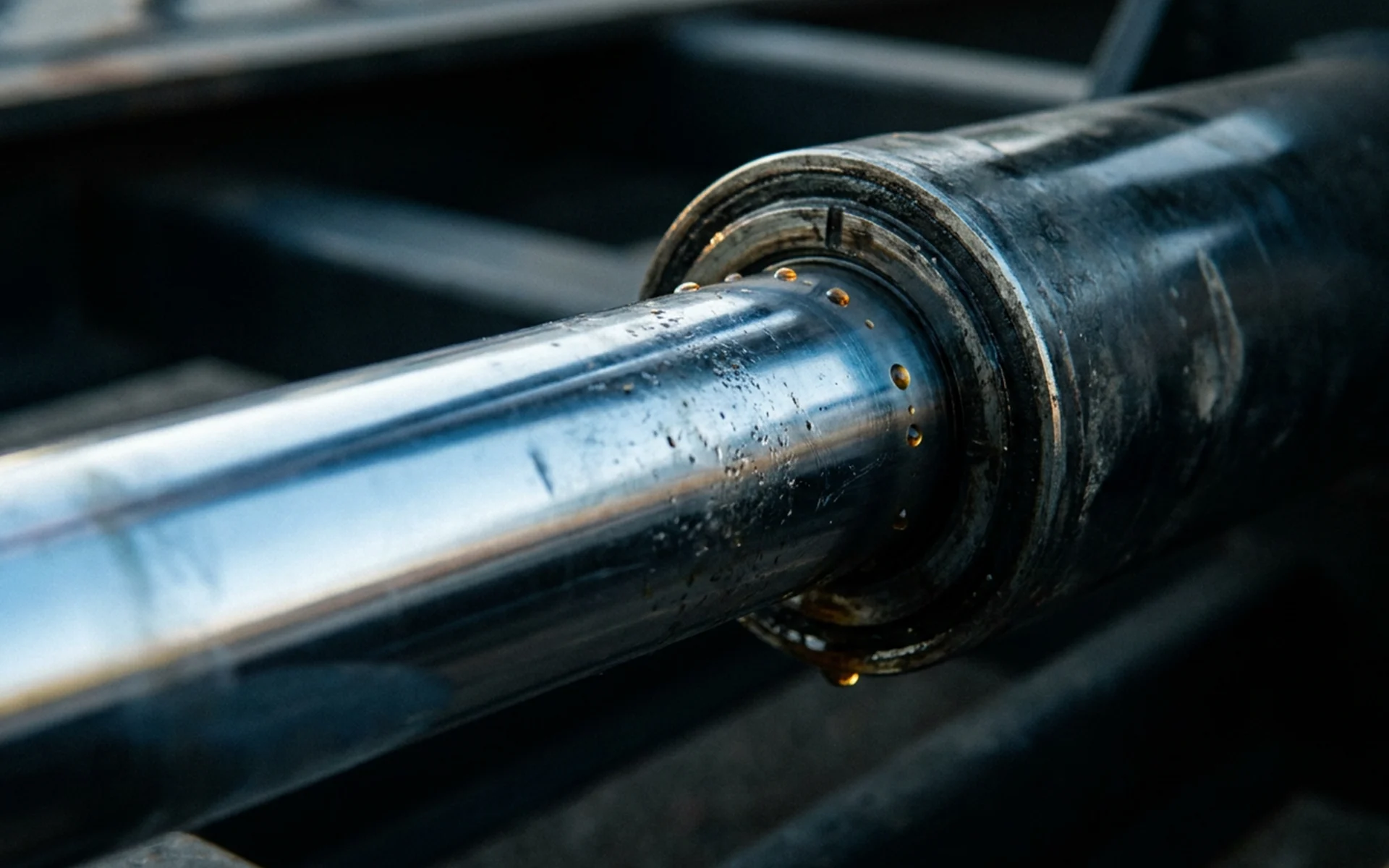
Run your eye and your hand over the kingpin. You're looking for grooving, flat spots, or a shank worn thinner than the head. A worn kingpin chews through good jaws in short order, so a cheap pin left too long becomes a pin and a fresh set of jaws. If it's grooved or the diameter is down, it's done — no filing it back.
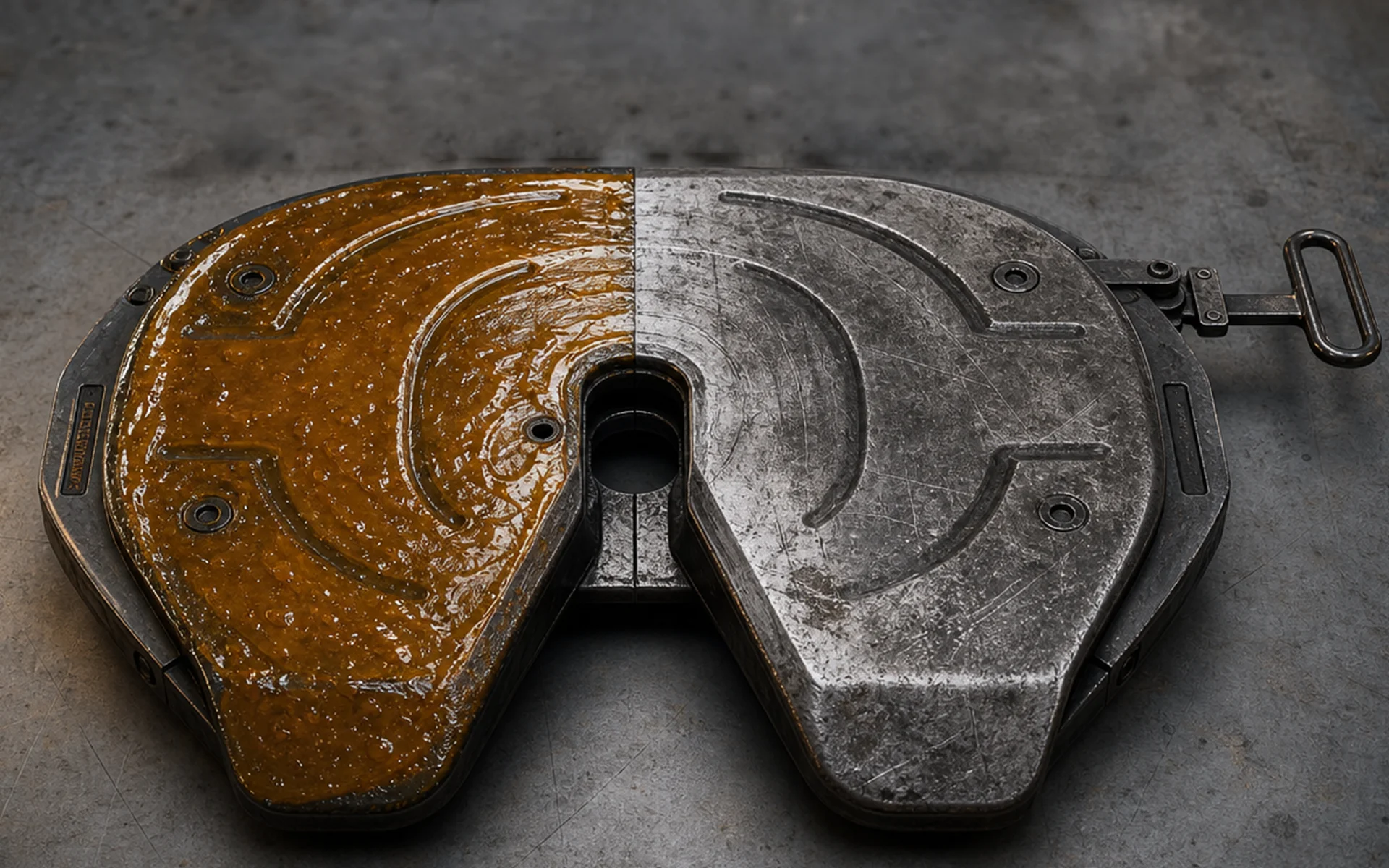
The fifth-wheel plate should carry grease evenly across it, not baked-off dry patches or bare, scored steel. A dry plate makes the truck steer heavy and wears both the plate and the trailer's bolster fast. While you're down there, look for scoring or bright worn spots — those tell you it's been running dry. Grease is the cheapest thing you'll do all week. A scored plate is not.
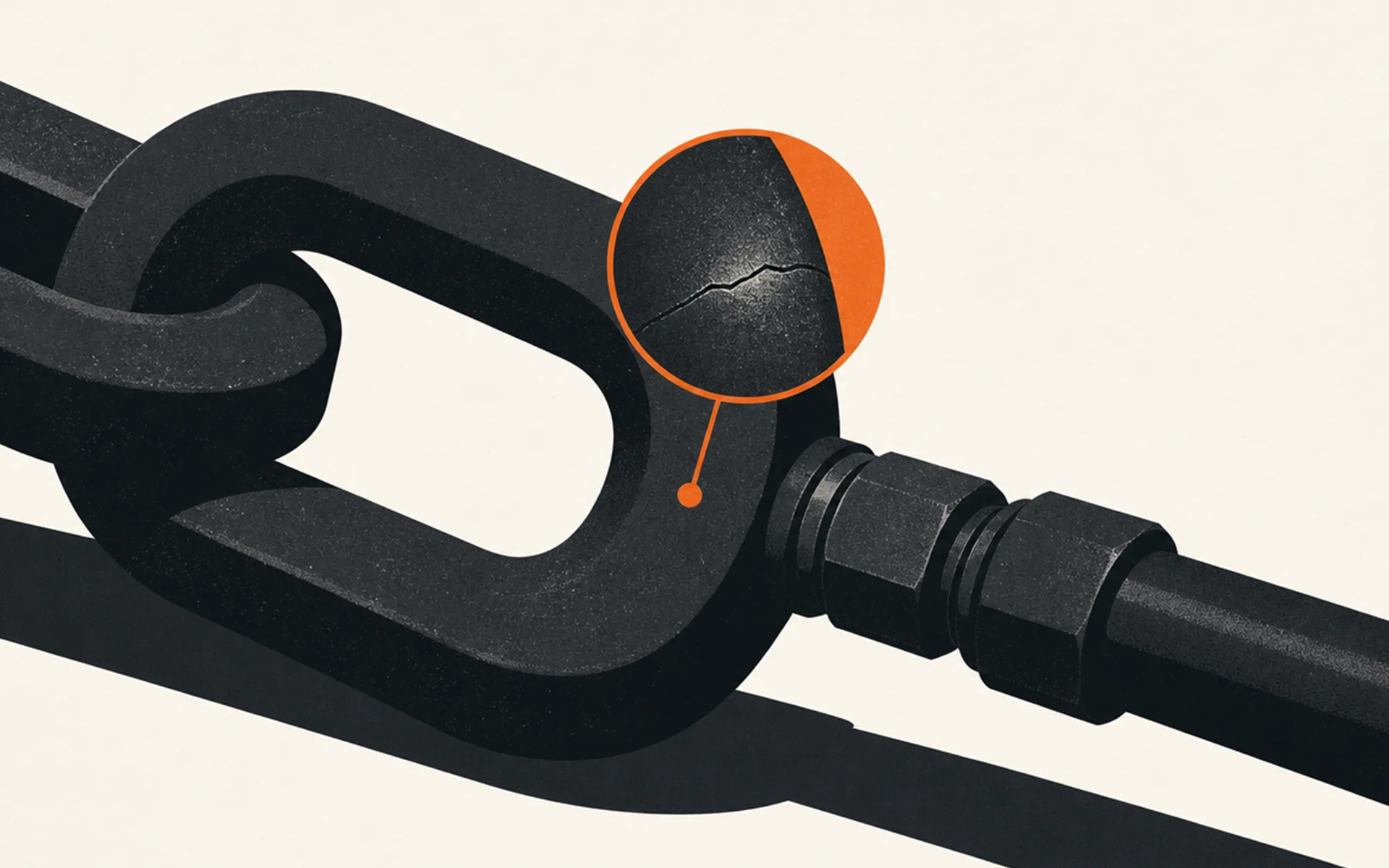
Car-hauler frames flex more than most, and that flex finds the fifth wheel. Check the plate, the mounting brackets, and the frame around them for cracks, and make sure every mounting bolt is there and tight. Then rock the assembly — a worn pivot or worn bushings will let it move more than it should. Cracks and loose mounts don't heal, and they don't give much warning before they let go.
None of these take long to check, and every one of them is cheaper to fix on a lift than on the side of I-80. A worn set of jaws, a kingpin, a pivot bushing — those are same-day repairs when the parts are already on hand.
Fifth wheels are core work at Fleet Service Center. The jaws, kingpins, and bushings for car-hauler equipment are on the shelf instead of on order, and the shop is run by someone who ran this equipment for years and knows exactly where it wears. Feel a chuck that's getting worse, or spot a crack you don't like? Get it on a lift before it strands you. Same day in most cases, next day at the latest — in English, Russian, or Spanish.