Broke Down on the Chicago Corridor? Do This Before You Call
Broke down on I-80/94/90? The five things to do before you call for road service — get safe, pin your location, read the symptom, and make the call fast.
Last updated on
July 27, 2026
You're stopped on I-80/94/90, the clock is running, and every minute costs you. What you do in the first few minutes decides how fast the right help reaches you — and how fast you're back rolling. Run through these before you get on the phone. They keep you safe and make the call a short one.
Before anything else, get the truck as far out of the lane as you safely can — the right shoulder, a ramp, an exit. Hazards on. Set your triangles out behind you the way FMCSA requires: one about 10 feet back, one about 100, one about 200. Nothing else on this list matters more than not getting hit.
Road service can't reach you fast if it can't find you. Note the exact spot: which interstate and which direction, the nearest mile marker, the last exit you passed. If you're off the highway, get the cross streets. Have that ready before you dial — it's the first thing you'll be asked.
Take thirty seconds to size it up. Is it drivable or not? What actually failed — a deck that won't lift or hold, the fifth wheel, air or brakes, a tire, electrical, a warning light, a leak on the ground? You don't need the full diagnosis; you need enough to describe it. The clearer you are, the better the odds the truck that comes to you shows up with the right parts on board.
Some things that strand you are simple: a blown fuse or a tripped breaker, a knocked-loose air line or trailer connection, low air, a fluid level you can see. If you can check them safely, do — you might be rolling again in minutes. What you don't do is crawl under the truck in a live lane or work on something you're not sure of. Safe and stranded beats hurt.
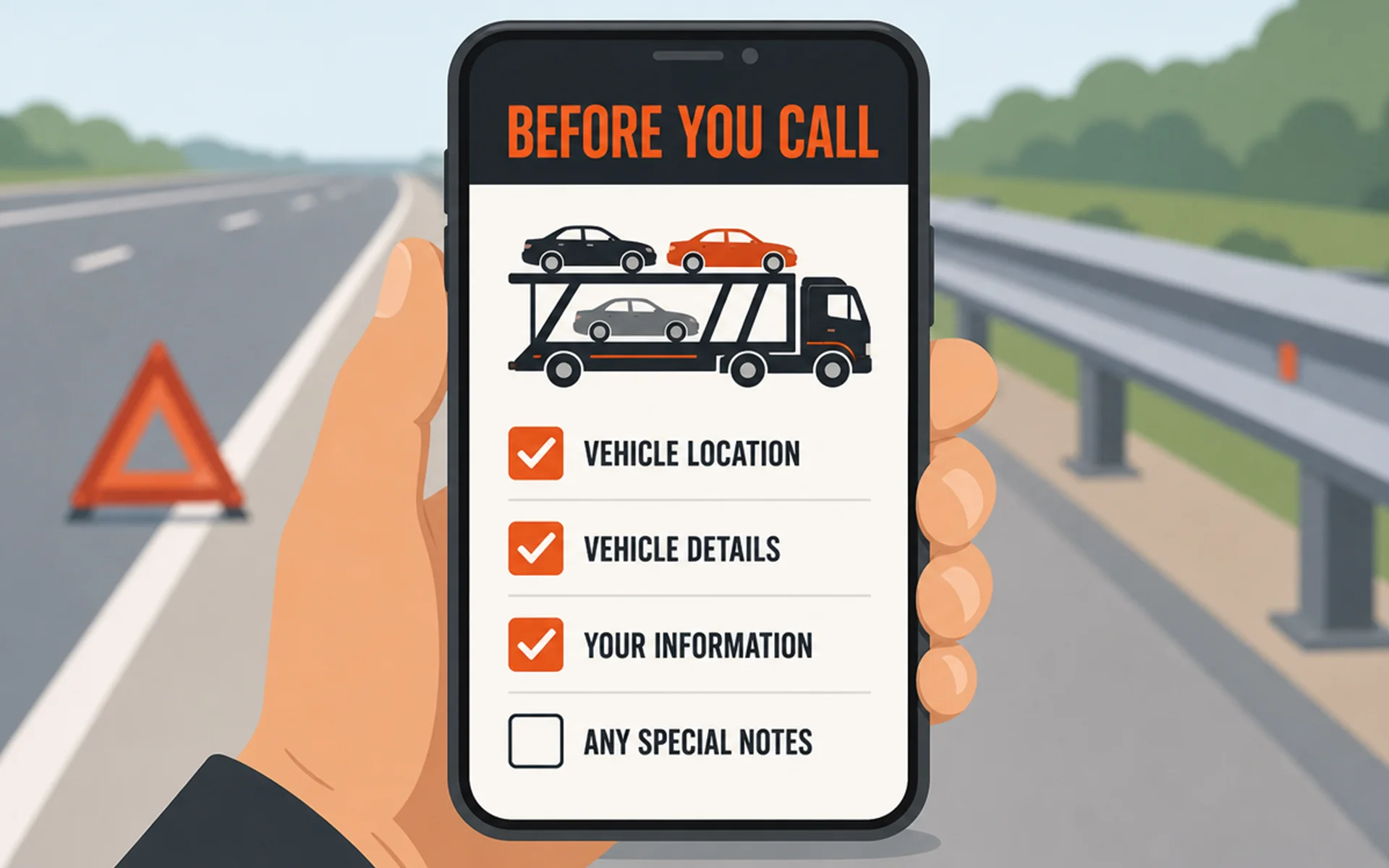
When you get on the phone, having these in hand turns a long call into a two-minute one: where you are, your truck and trailer and what equipment it is, the symptom, whether you're loaded, and whether it'll drive. That's what gets the right help — and the right parts — moving toward you, instead of a round of twenty questions.
Fleet Service Center runs road service across the Chicago corridor and out to — so when you can't bring it in, the shop comes to you, with the car-hauler parts most trucks would have to go hunt down. You'll talk to people who've run this equipment and know it cold, in English, Russian, or Spanish. Same day in most cases, next day at the latest.